Thursday, September 29, 2022

Ian!

Hello and welcome to The Greenkeeper!  Today is Thursday, September 29th and our region awaits the arrival of Ian. Ian made landfall yesterday afternoon on the southwest coast of Florida as a strong Category 4 Hurricane. My thoughts and prayers go out to so many friends and peers in Ian's path!

As of 11:00 pm last night Ian's remnants are expected to make their way across Florida then turn back inland and head for the Queen City as if running a post corner route. The good news is local meteorologists expect Ian, or what is left of Ian by the time it arrives to be mostly a rain event in our area. 

Courtesy Brad Panovich, WCNC

Now, we have seen more than our fair share of tropical induced systems pass across our region in recent years. In 2018 we endured Florence just before the U.S. Mid-Am and Michael a few weeks later just prior to Fall Member-Guest. And it was just two years ago we had four named storms (Sally, Beta, Delta, and Eta) with varying impacts to the golf course. 

I stated earlier the forecast is mostly rain and I'm hearing we can expect a total somewhere between three and five inches (75-125 mm). That is a lot of rain, but we are currently in our longest dry spell since late April into early May as the last recorded rainfall at CGC was sixteen days ago. The other aspect is this rain is expected over several days so the golf course should absorb a great deal of needed moisture before the ground becomes saturated and runoff begins to refill our irrigation reservoir. If you haven't noticed we remain about five feet below full pond dating back to our driest June in ten years. 

Rain Expected Next Few Days

I guess you could say if a tropical system was going to visit we are about as ready as one could be. Let's all be good scouts and get prepared. I hope the power and communication lines remain intact for everyone and Good Lord willing the cleanup afterwards won't be too daunting. 

In other news, we have several course improvement projects in the queue. I hinted at these in my last post and I've detailed them in the soon to be released Ross Report. What I can tell you is one of these projects will start next week! 

That's right, the bunker renovation will commence Tuesday, October 4 as the team from Golf Course Services, Inc. will be back on site as we make our way through the remaining 71 bunkers on property. Here's a link Click Here from last year highlighting the process for those needing a refresher.


Stay warm, stay dry and stay safe!

Matthew Wharton, CGCS, MG 

Thursday, September 8, 2022

Looking Ahead!

Hello and welcome to "The Greenkeeper"!  Today is Thursday, September 8th and putting green aerification is in the books for 2022! We performed a hollow-core aerification with 1/2 inch diameter tines on a tight 1.5 x 1.3 inch spacing producing 73.8 holes per square foot. Considering we have 122,607 square feet of putting green surfaces, we created just over 9 million holes impacting just under ten percent (9.28%) of the surface area. 

In other words, this aerification was designed to impart maximum impact as we enter into a busy fall event schedule. The holes were back filled with soil amendments and nearly 50 tons of sand creating channels to help provide oxygen into the root zone and move water quickly from the surface down through the soil profile. Here is a great USGA Course Care Video illustrating the reasons why we aerify.

We managed a fortunate break with the weather this week too. Although Monday's rain dampened everyone's holiday golf, the 1.01" of off-and-on showers gave the golf course a much needed thorough soaking. It had been exactly one month (1.04" on Aug 5) since CGC had received that much rain and with the trees outcompeting turf this time of year it was really starting to show in parts of the rough. Also, with the rain moving through the region on Monday we managed to stay dry both days to get the job done. ;)

Now with aerification in the books, and the days getting noticeably shorter it is time to set our sights on fall, and winter. Next on our agenda will be fall preemergent herbicide applications. Each year we treat over 100 acres of Bermudagrass tees, fairways, and rough with preemergent herbicide to manage unwanted winter annual grasses - most notably annual bluegrass (Poa annua). In other words, this annual treatment is what keeps our dormant Bermudagrass canopy "clean", without it the winter playing surface would be dotted with little Poa plants. This process takes multiple days and we typically target our applications for the end of September.  

We have a few other projects on the horizon including some needed tree work, bunker renovations, and more designed to improve course conditions and ultimately your playing experience. I have outlined these in the upcoming Ross Report quarterly newsletter, so be sure and keep an eye out.

Football season is here, which means it truly is the best time of year to play golf at Carolina. Don't worry, the greens will heal before you know it. In the meantime, best of luck to Brett Boner and Hayes Brown as both players represent CGC in the 2022 U.S. Mid-Am at Erin Hills. Practice rounds are today and tomorrow and stroke play qualifying rounds are Saturday and Sunday. 


See you on the course,

Matthew Wharton, CGCS, MG


Tuesday, August 16, 2022

Beware of the Dog!

Hello and welcome to "The Greenkeeper"!  Today is Tuesday, August 16th and I am happy to report the Dog Days of Summer are officially in the rear-view mirror! I don't know about you, but this year's version was one of the steamiest I can remember and the data backs it up. 

I know it's been a bit since my last post so let's take a look at a brief refresher then move forward from there. You may recall June was hot and dry. In my last post I mentioned June 2022 was the 16th warmest all-time, including our first official triple digit high temperature in seven years when the mercury reached 101 degrees on June 23rd. And I also referenced the 1.59 inches of rain the entire month made June 2022 the driest since 2012, an entire decade. 

That pattern changed right around Independence Day when the golf course received nearly 3 inches rainfall (2.98") over a period of seven consecutive days. As my late grandmother would have said, "Dog Days are setting in wet this year." And she would have been correct.

When the Dog Days arrived the pattern switched from a dry one to an extremely humid one which fuel thunderstorms. I do not believe the dew point ever dropped below 70 degrees, which is very humid, and by the time July ended we had received nearly 6 inches of rainfall (5.98").

What does all this mean you ask? Basically we went from hot and dry which are good conditions for managing turf when adequate or abundant irrigation resources are on hand (we used 5.5 million gallons in June), to hot and wet which are difficult conditions for managing turf as we are no longer in control of the water (only 2 million gallons were needed in July) and keeping up with the growth rate of bermudagrass is a challenge. We have applied more plant growth regulator this season than any other I can remember. 

Now, for those of you unfamiliar with the Dog Days of Summer or the term's origin or meaning it comes from the Romans. They recognized the star Sirius, also known as the dog star because it is the brightest star in the constellation Canis Major (large dog) will rise and set in conjunction with the sun each year. The Romans named the period for 20 days before and 20 days after this conjunction "dog days" after the dog star. The Romans also thought Sirius gave off additional heat due to its brightness and the extremely hot weather associated with this period. 

Canis Major
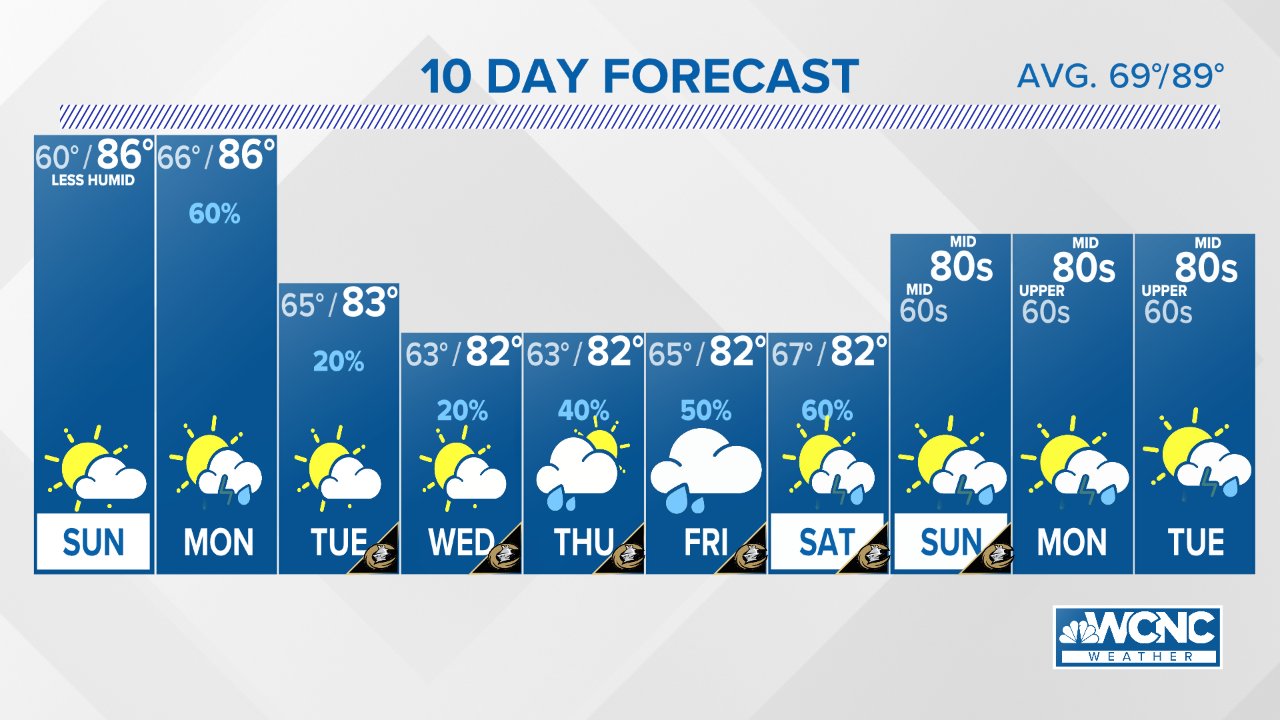
In our latitude this period typically occurs beginning on or around July 3rd and wraps up around August 11th. Many years it is not uncommon for our weather pattern to extend well beyond the definition of dog days, but this year they started and stopped nearly on the button when the dew point finally dropped to comfortable levels throughout the day during our recent Guest Day on August 12th! And the relief lingers based on this recent 10-day forecast:

WCNC, Brad Panovich

So what does all this mean for the golf course going forward? Well, the lower temperatures and lower dew points should make for better putting surface quality as the bentgrass can recover with overnight lows finally reaching the 60s. In fact we started lowering the height of cut today as the extended outlook indicates the worst of summer is behind us. 

But, even if the heat and humidity should return, the days are getting noticeably shorter and we are now just three weeks away from putting green aerification. Time to enjoy the last few weeks of summer and set our sights on fall.

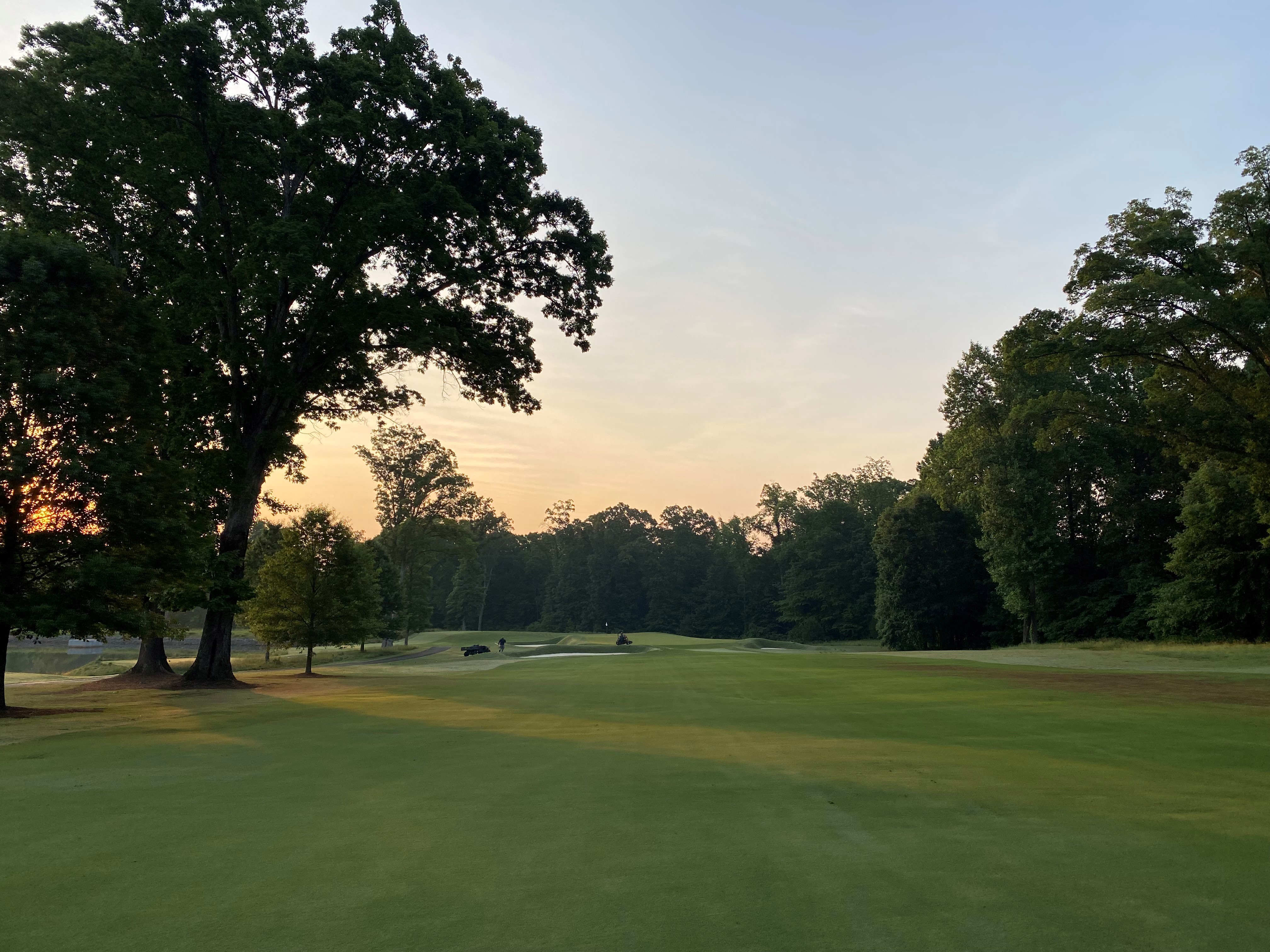
In other news, our friends with Arborguard Tree Specialists were on site yesterday to finish up a project we started back during fairway aerification week. During our course closure in July they were able to remove several overgrown understory trees on the right side of Hole Number 1, beyond the right fairway bunker leading down to the corner by the greenside bunker. Yesterday they returned to prune the encroaching growth from the large oaks flanking both sides of the fairway, and the result is a natural appearing removal of 17 years of growth and overhang.

Before (May 20th)

After (Aug 15th)


My apologies for not capturing a better view of the before and after on the righthand side, but trust me, the next time you play the first hole you will immediately notice the difference. This will vastly help your game and our ability to grow healthy turf on this section of the golf hole. 

Now, back to enjoying the rest of summer and setting our sights on fall.

See you on the course,

Matthew Wharton, CGCS, MG


Thursday, July 14, 2022

Aerification Week Recap!

Hello and welcome to "The Greenkeeper"!  Today is Thursday, July 14th and the 150th Open Championship is underway at The Old Course at St. Andrews! I don't know about you, but I have felt like a kid in a candy store all week trying to absorb all the content about the amazing history of the golf course and town. I'm hoping for a little magic on the course the next few days and a feel good story come Sunday afternoon. Hope you get an opportunity to take in as much golf as you like and enjoy the competition too.

I wanted to recap the cultural practices performed on the course last week and talk a little about the decision to move the process from June to after July 4, but before I do let me bring you up to speed on the abrupt change in our recent weather.

You may notice our irrigation reservoir is several feet below full pond. This is a direct result of June 2022 being the driest June at Carolina Golf Club since 2012! We only received 1.59 inches rain the entire month of June this year and one-third of that total came in the last week so we were really dry with just a few days to go.

On top of the dry conditions June 2022 was the 16th warmest all-time, including our first official triple digit high temperature in seven years! That's right, the last time Charlotte recorded a high temperature of at least 100 degrees was back in 2015 before setting a new record of 101 degrees on June 23rd. 

So the hot and dry conditions really had the course a little toasty on the edges and playing firm. Then the pattern changed just as aerification week began. It actually started with a thunderstorm that disrupted Independence Day festivities when 1.05 inches rain quickly fell at 2:00 pm.

For seven consecutive days we received measurable rainfall tallying 2.98 inches. Needless to say, the pump station has enjoyed some well deserved time off and luckily after the 4th, all the other rain events took place in the early evening or overnight hours meaning it did not interrupt our cultural practice activities. In fact, if it is going to rain nearly 3 inches at the golf course I want it to be after spreading nearly 300 tons of sand on all tees, fairways, approaches, and surrounds. ;)

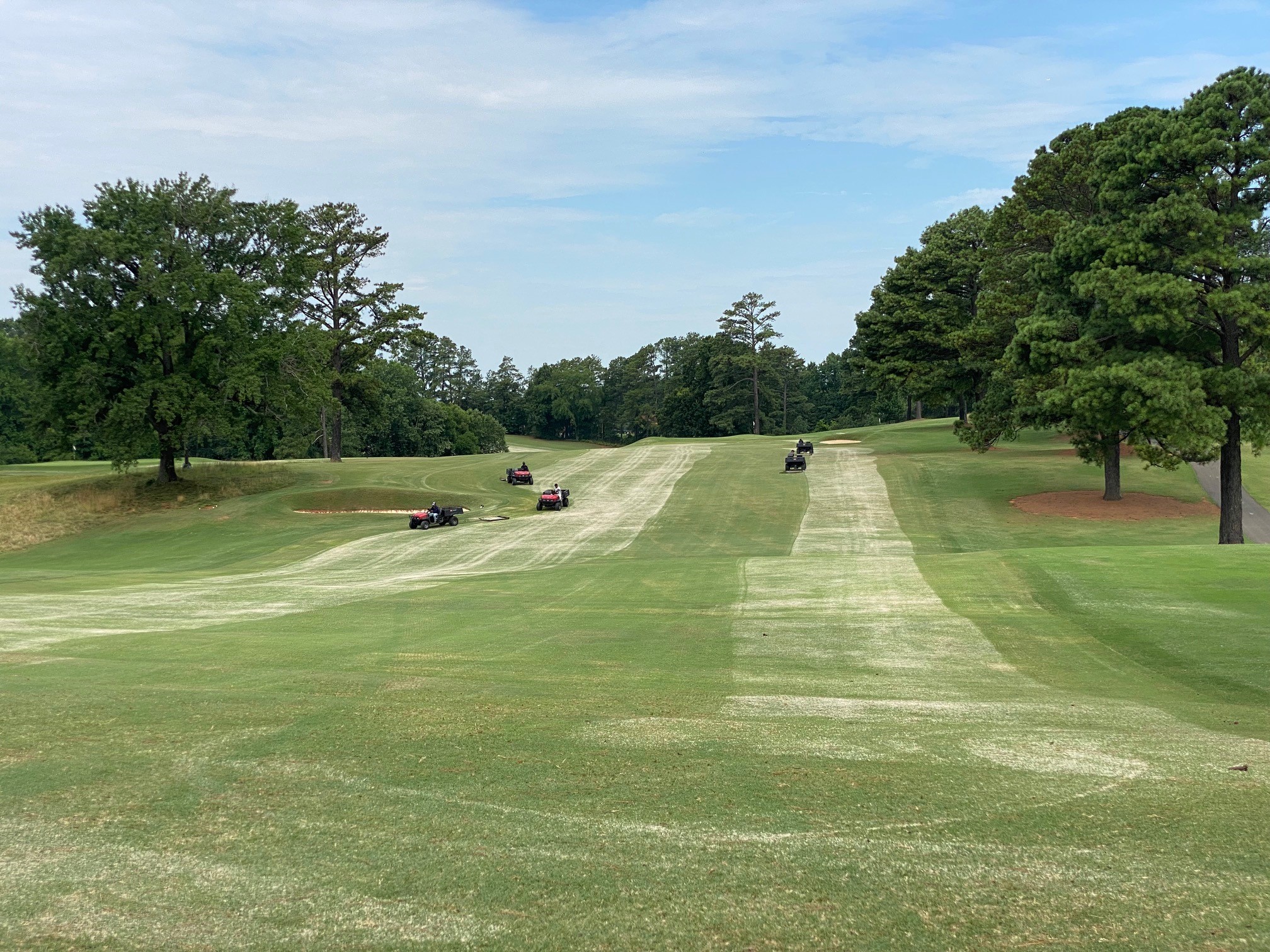
So, while you were away all the fairways were verticut to a depth of 4.75 mm removing countless cubic yards of thatch. Following the debris removal the fairways were circle mowed to clean and make them ready for sand topdressing. Sand is applied at the rate of 10 tons per acre and then brushed in using old driving range mats towed behind utility vehicles. Mother Nature then supplied the water overnight and the fairways are healing rather quickly.

Lots of Debris


Cleaning it Up


Ready for the Sandman


Sandman

Dragging it In

While all this is happening, we were also core aerifying all the tees, removing the cores, topdressing with sand, and dragging in. All the approaches and closely mowed green surrounds were also topdressed and solid-tine aerified. It really is a large undertaking and my team and I are extremely thankful you allow us the time to perform these cultural practices in a safe and efficient manner. 

I mentioned above this process used to take place in June but recently has been repositioned on the calendar to closely follow Independence Day. This decision was approved by the Committee because closing the course this time of year gives the putting greens a nice break during what is typically some of our warmest weather. The reprieve from traffic in mid-summer really helps the greens to recover and better tolerate the remainder of our summer schedule. In fact we vented the greens on day 1 of aerification week before equipping the machines with the tines needed to aerify the tees.   

In other news, we recently completed the summer mowing of our warm-season native areas. You may recall the areas predominantly consisting of fine-fescues are mowed in late winter and early spring, but the areas dominated by broomsedge and bluestem are mowed in the summer. 


With these tasks behind us the team is now tackling the dam and it is time to reapply growth regulator to tees and fairways to help us manage the rate of growth and quality of cut. 

Enjoy The Open,

Matthew Wharton, CGCS, MG 

Tuesday, June 14, 2022

Prevent Defense!

Hello and welcome to "The Greenkeeper"!  Today is Tuesday, June 14th and I'm writing this as a strong thunderstorm is dropping much needed rain on Carolina Golf Club! Prior to this storm we had only received 1/4 inch of rain the entire month, and with temperatures reaching 98 degrees yesterday and establishing a new record you can see why I would welcome some natural rainfall.

Ironically today's rain event was not forecast as temperatures were originally expected to climb north of 100 degrees later today. Will be interesting to see if that remains the case with this much needed reprieve. Considering the temperature was 85 degrees when I left the house this morning, can't say I'm surprised this storm system strengthened as it approached the Queen City.

But enough about the rain, what I really want to talk to you about is the heat. Earlier I mentioned we set a new record high temperature yesterday and the extended outlook for this week and most of next is hot and steamy to say the least. It is in these conditions that we manage our bentgrass putting surfaces differently in order to protect them from these extremes.

In fact, we initiated these steps last week when the greens were vented. This process helps promote gas exchange, improves water infiltration, and is recommended by the United States Golf Association Green Section.

Yesterday we applied a plant protectant fungicide to help prevent the formation of Pythium Root Rot, a fungal disease of turfgrass that can be prevalent during summer thunderstorm season. We combined yesterday's application with a wetting agent to help remove water from the surface and penetrate deep into the root zone.

Another preventative step we take this time of year is to raise the height of cut (HOC) on the greens and replace the grooved front rollers with smooth rollers. The HOC adjustment helps with photosynthesis and the smooth rollers assist with reducing stress on the turf during this sensitive period.

Of course, our fans are also an important tool that aids bentgrass survival and they have all been reinstalled and are operating. I have some great info on exactly how the fans work in helping cool-season grass survive the heat and humidity that will be appearing in the next Ross Report, so please check that out later this month.

In the meantime, here is a link Click Here to a post from 2016 that goes into even more detail about the way we manage the greens during the spring and fall as opposed to the summer. It contains a link to a great USGA article about putting green speeds, so please be sure and give that info a quick read.

Sounds like the storm is nearly passed, time to go assess course conditions and determine our strategy for the remainder of today. Stay cool and walk in the shade when you can.

See you on the course,

Matthew Wharton, CGCS, MG

Tuesday, May 3, 2022

May Day!

Hello and welcome to The Greenkeeper! Today is Tuesday, May 3rd, where does the time go? You might be looking at the title of this post and thinking it's a distress call, but not to worry, that is not the case. I had hoped to have this out on May 1 and was reminiscing about May Day festivities involving the Maypole and May Queen from elementary school days when I came up with the title.

But I do believe some of you may be concerned about some areas of the golf course lagging behind, and we will discuss those soon. I also want to update you on an improvement project recently completed and talk about some treatments we applied during our maintenance day yesterday. So let's get started.

We wrapped up April with 3.34 inches rainfall at CGC and an average high temperature of 74 degrees, which is downright pleasant. But unfortunately our average low temperature was 51 degrees, which is a far cry from the 60 plus degree temperatures most conducive for Bermudagrass growth.
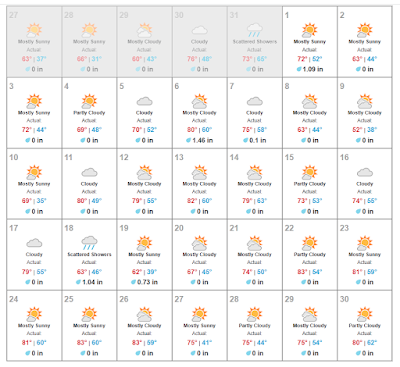
April 2022

In other words, April was mostly cool and dry characterized by low humidity and strong, cool breezes. That is a recipe for great bentgrass, but not so much when trying to get other areas of the golf course negatively impacted this past winter involving high traffic and/or shade to fully grow in. 

Bermudagrass is known as a warm-season grass and thrives in warm, humid conditions. Yes, the grass will break dormancy and begin to grow even in our cool springs, but there is a difference from greening up versus lateral spread of the plant that fills in thin areas impacted by stresses such as high traffic or shade. This is why golf courses sprig Bermudagrass in the months of June and July, and is why sodded areas can take months to fully mature and have seams disappear from view.

This is the first winter injury we have endured since 2018 Click Here and it comes as no surprise given the fact our Bermudagrass broke dormancy in late December before reentering, breaking again in early March, only to experience a hard freeze on March 13. To be honest, after looking back at the injury endured four years ago, things this year seem mild. 

Yesterday we started the road to recovery as warm temperatures were present in the Queen City. We fertilized the areas needing extra assistance on Holes 1, 4, 5, 6, 8, 9, 10, 11, 13, 14, and 15 and will continue to do so weekly until they fully grow-in. In the meantime you can help by simply avoid driving your golf car in these areas. 

In other news, last month we wrapped up an improvement project accessing the Back Range Tee. We removed the old asphalt path that wrapped completely behind the tee, relocated the access further to the right, and paved a new path that starts a little further down the hill from the original and terminates in a turning circle at the top of the hill, right of the tee. There is also a place for parking at the top of the turning circle. Our contractor for this work was John E. Jenkins, Inc. in Gastonia, the team that did our cart path improvements last summer. 

Removing the old path from behind the tee required us to regrade the slope and install new turf. We selected Celebration Bermudagrass for its greater shade tolerance over other Bermudagrass varieties and obtained the sod from Modern Turf, Inc. 


The areas where straw mat was used were seeded to our fine-fescue mixture utilized on the golf course, for fine-fescue is the most shade tolerant of all grass types. We still need to remove some severe overhanging limbs that are creating a winter shade issue but overall I believe those of you that like the privacy provided at the Back Range Tee will find this to be a big improvement. 

Side note: the old path removed was a remnant of the original cart path when the first green and second tee occupied that area prior to 2006.

And finally, just to recap some of what transpired during our maintenance day yesterday. I already covered the fertilizer treatment to thin areas. We made a gypsum application to all putting greens yesterday. Calcium Sulfate was applied to not only boost our soil Calcium levels but also displace the buildup of Sodium caused by the recent lack of natural rainfall (15 days since our last rain event) and reliance on irrigation water.

We also treated the greens with a wetting agent. This is a chemical compound that helps prevent and alleviate the formation of localized dry spot (LDS). LDS occurs when naturally occurring waxy deposits form on the soil particles creating hydrophobic conditions. The combination of the gypsum and wetting agent followed with heavy irrigation to move both products into the soil flushed the sodium below the root zone where it can no longer impact plant roots, and rehydrated the root zone eliminating any hydrophobic conditions.

Now we set our sights on the spring Member-Guest. Hard to believe it is just ten days away! The course should continue to get better each day so come out an enjoy it. And hopefully we will get a little rain before the week is out. Believe it or not, this current dry stretch is the longest so far of 2022.


See you on the course,

Matthew Wharton, CGCS, MG

Wednesday, March 30, 2022

March Recap!

Hello and welcome to The Greenkeeper, today is Wednesday, March 30th and although there is still one more day to go this month, I wanted to provide you with a recap. Several years ago I stated how I believe March to be the least attractive month for the golf course March Madness, and I still feel that way. Having said that, I do believe this might be the best the course has looked this time of year, and I'm hopeful that is a sign of more good things to come this season.

We only received 10.22 inches rainfall during meteorological winter (Dec-Feb) but we have already received more than half that amount (5.24 inches) just in March alone! Despite the soggy start to meteorological spring, the spreader truck driver expressed Monday we were the driest golf course he had experienced across the southeast so far as we made our annual application of slow release fertilizer that will feed our tees, fairways, and primary rough for the majority of the season. 


Also, the week after putting green aerification I traveled to Raleigh for a GCSAA chapter meeting. The Southeast Regional Conference had not been held since March 2019 due to the Covid pandemic, so it was good to finally get out and see some of my fellow superintendents from across North and South Carolina. Traveling along I85 and I40 I quickly realized how far ahead the growing season is in Charlotte compared to the areas around Greensboro and Raleigh/Durham. 

In fact, I mentioned to several of my peers I thought our tees and fairways were in need of their first mowing before I traveled, but we were unable due to the excessive wet conditions as 2.81 inches rain fell in the first three days post aerification. Also, considering temperatures were forecast to plummet to as low as 20 degrees F on the morning of March 13, it was probably best to not mow right away.

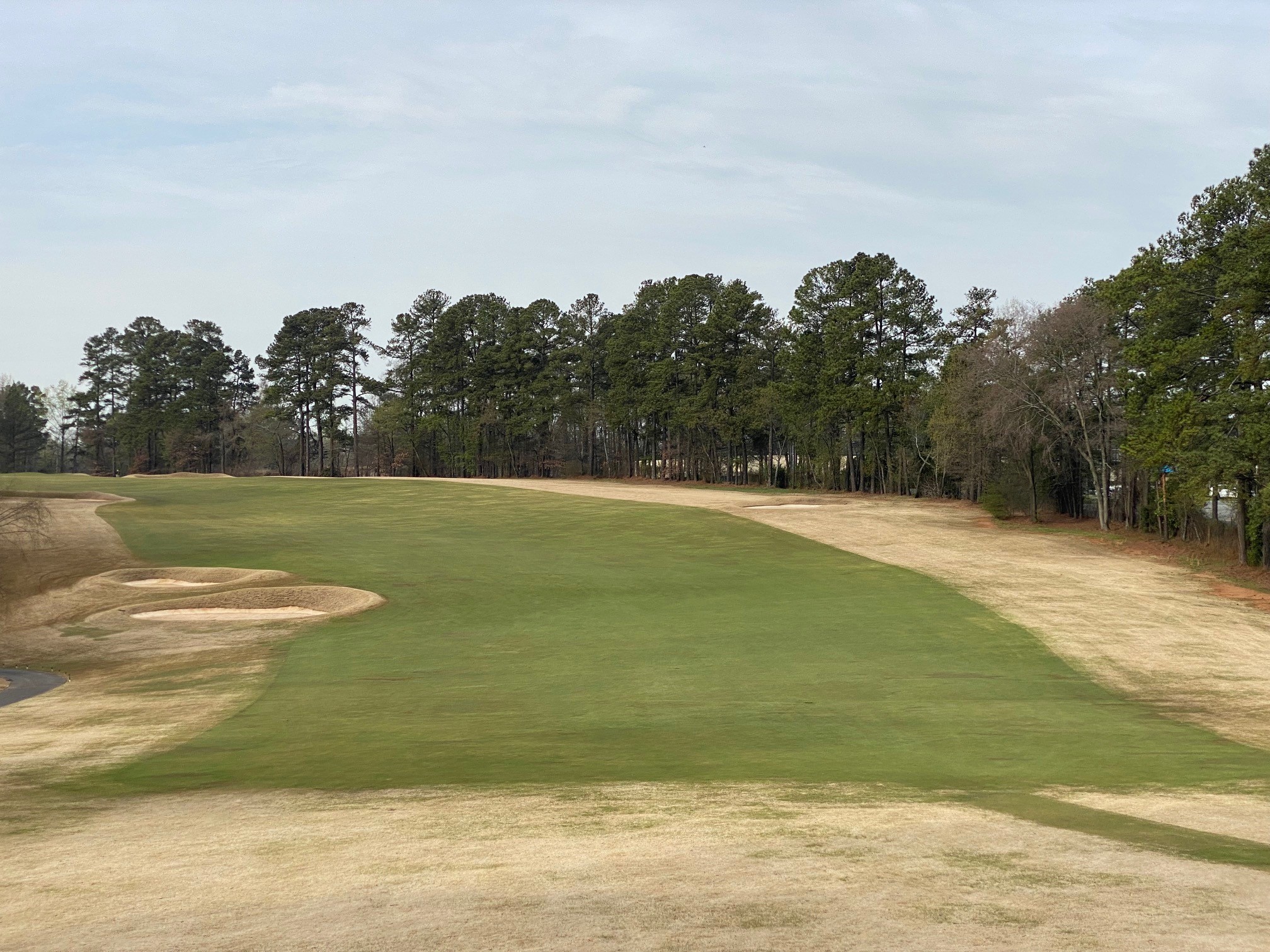
Sure enough, upon my return the frigid freezing temperatures had created a great deal of leaf burn turning our early green fairways brown again. 

March 8th
March 16th

But our playing surfaces have shown amazing resilience and quickly bounced back. We mowed all tees, fairways, approaches and closely mowed surrounds on the 22nd and 23rd removing the burnt tissue and revealing a golf course greener than usual for this time of year. 
Close Up View of Leaf Burn

March 22nd 
We now turn our attention to mowing the rough for the first time this year. Our initial mowing is at a lower than normal playing height in order to remove as much dormant material possible and open the canopy to sunlight penetration. As a result this operation is always slow and generates a lot of material that must be removed from the playing surface, so thank you in advance for your patience. With March almost in the rear view that means The Masters is almost here! Always the most exciting time of year!


See you on the course,

Matthew Wharton, CGCS, MG